3D Printing for Beginners: From Digital Design to Finished Part
Understand how 3D printing works, what a slicer does, and how to plan your first custom 3D printed part.
What happens when you order a 3D printed object?
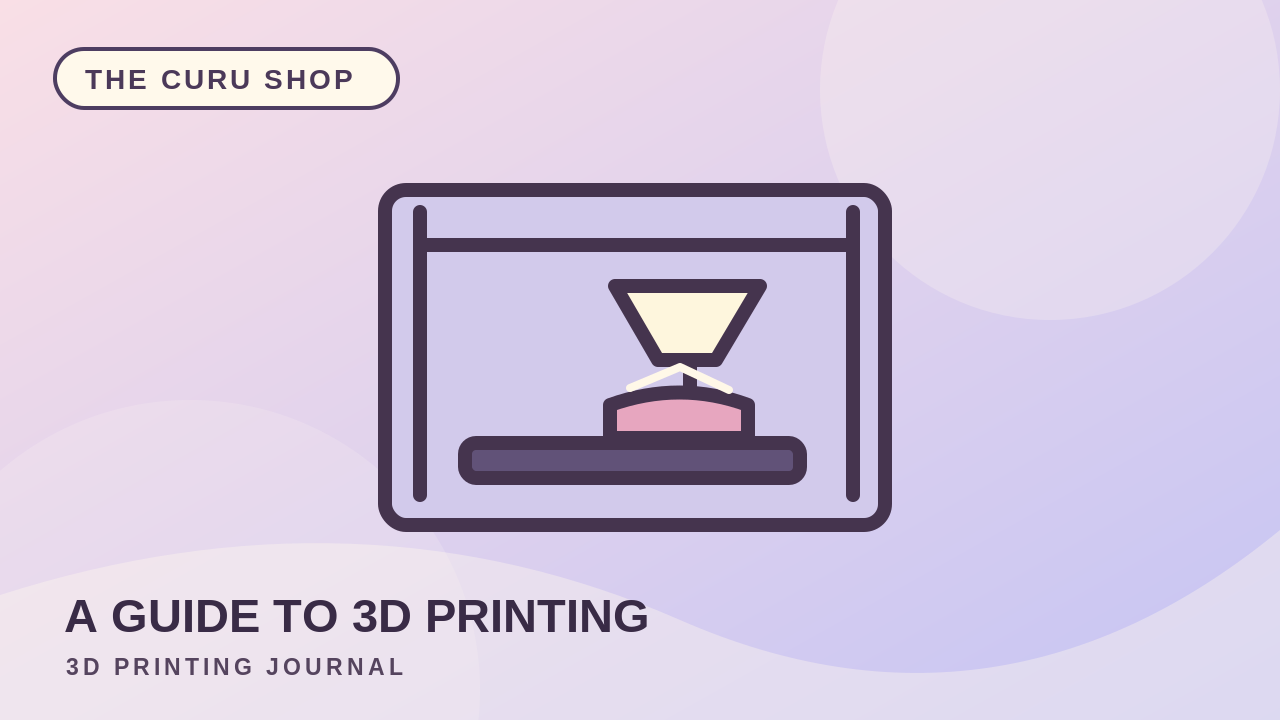
A 3D print begins with a digital model, usually stored as an STL or 3MF file. The model describes the shape, but it does not tell the printer exactly how to produce each layer. Slicing software turns the geometry into machine instructions, accounting for the chosen material, layer thickness, supports, and print orientation.
For common plastic objects, fused deposition modelling (FDM), also called fused filament fabrication (FFF), uses a heated nozzle to place melted filament one layer at a time. This method is popular for useful parts, personalized gifts, organizers, prototypes, and display pieces. Other technologies such as resin printing use different processes and have different strengths.
Start with a use case and dimensions
Before choosing a design, describe what the part needs to do. Will it sit on a shelf, carry a load, fit around another object, or simply look attractive? Measure the available space in millimetres and note where precision matters. Even a beautiful model can fail if its mounting holes or internal clearances are incorrect.
Wall thickness, overhangs, small text, unsupported details, and print orientation all affect whether a model prints reliably. For containers, think about lid clearance, hinge movement, and how the bottom contacts the print bed. For decorative objects, consider visible layers, colour, and the most important viewing angle.
What affects print time and cost?
Size is only one factor. Material use, infill, wall count, supports, layer height, and the number of pieces can substantially change print time. A taller model with fine layers may take longer than a wider model. Finishing, assembly, painting, and shipping may be separate considerations.
A practical first-print checklist
- Confirm the model dimensions in millimetres
- Check the rights or licence to print your model
- Explain the intended use and expected load
- Choose a colour and surface finish
- Ask whether assembly or post-processing is needed
- Review the quote and order details before payment
Ready to explore?
You can browse made-to-order designs, request a tailored quote, or use our browser-based modelling tools to explore boxes, vases, and other printable projects. A clear brief and accurate measurements make conversations about feasibility much easier.